
WISC Practice for 13-year-olds
Buy NowThe Wechsler Intelligence Scale for Children (WISC) is often used as an entrance exam for gifted and talented programs to determine cognitive strengths and weaknesses and is individually administered, usually by a psychologist.
This comprehensive, clinical instrument assesses the cognitive intelligence of children aged 6 years 0 months through 16 years 11 months. The major difference in how the test is administered by age is the starting point: older kids will start at more difficult sections of each subtest. The WISC-V is the updated version, which has more interpretive power, is more user-friendly, and is also more efficient.
Testingmom.com helps prepare your child for the WISC-V by providing challenging questions and games and making learning interesting and fun for your thirteen-year-old! We have 1000s of practice questions and games to fully prepare your child for the WISC-V. Below are a couple of examples of our practice questions.

TESTINGMOM The Trusted Leader in Gifted Test Prep
- 1M+ families helped
- 15+ years supporting test prep families
- Created by Karen Quinn, The Testing Mom, the foremost expert on gifted tests

1. Fluid Reasoning – Matrix Reasoning – Analogies
Parent Instructions
With each question, here is what you should say and do:
Do you see these 4 boxes? In the top row, the pictures fit together in a certain way (point to the two pictures at the top and make sure your child sees how they fit together). Now look at the bottom row. Do you see the empty box? Which of the 4 pictures in the answer row (point to the answer row) goes with the picture in the bottom box the same way the 2 pictures in the top row go together?
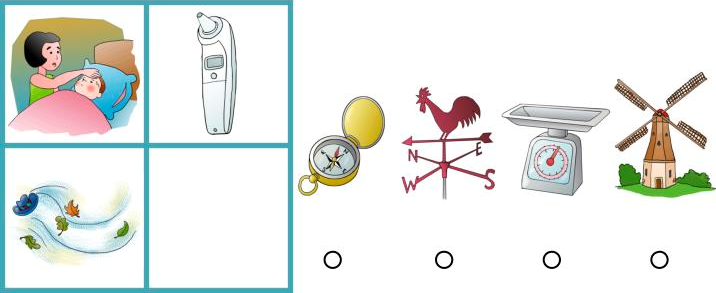
Answer: 2, wind vane
2. Visual Spatial Reasoning – Visual Puzzles
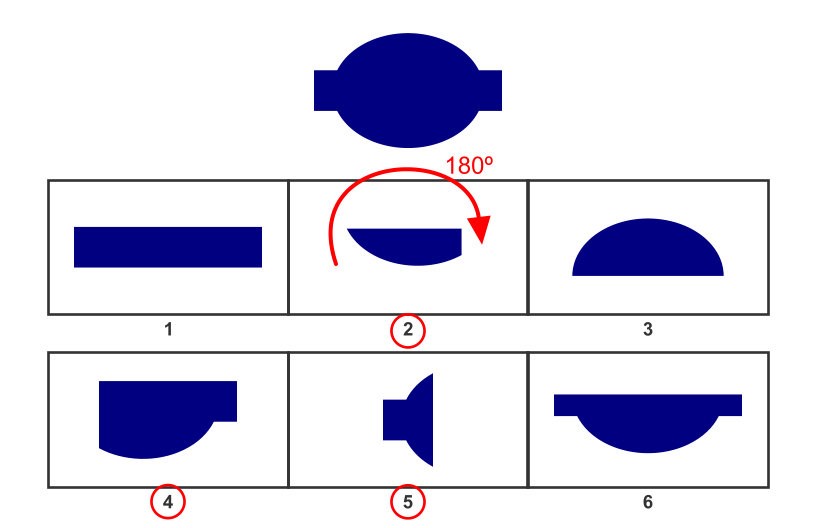
The Visual Puzzle subtest measures your child’s ability to analyze and synthesize visual-spatial information. Within 30 seconds, your child views a completed puzzle, then chooses the 3 pieces that, when combined, make up that puzzle. In some cases, 1 or more of the pieces will need to be “mentally rotated” to fit into the puzzle.
Parent Instructions
Parent, say to your child: “Look at the shape on top. That is a completed puzzle. Choose the 3 pieces below that combine to complete the puzzle.”
-As the puzzles get harder, your child may have to mentally rotate or flip 1 or more puzzle pieces to make them fit into the puzzle.
-Your child’s responses can be in any order.
-Your child can point to or say out loud the numbers that make up her answers.
-Your child must select 3 pieces. In some cases, 2 pieces might complete the puzzle, but that isn’t the correct answer. There will always be 3 pieces that combine to make up the puzzle.
*On the test, students have 30 seconds to answer. Timing starts from the end of the question asked. When you are practicing this skill, don’t worry about the timing. Your child will get faster with practice. Just know that this part of the test is timed.
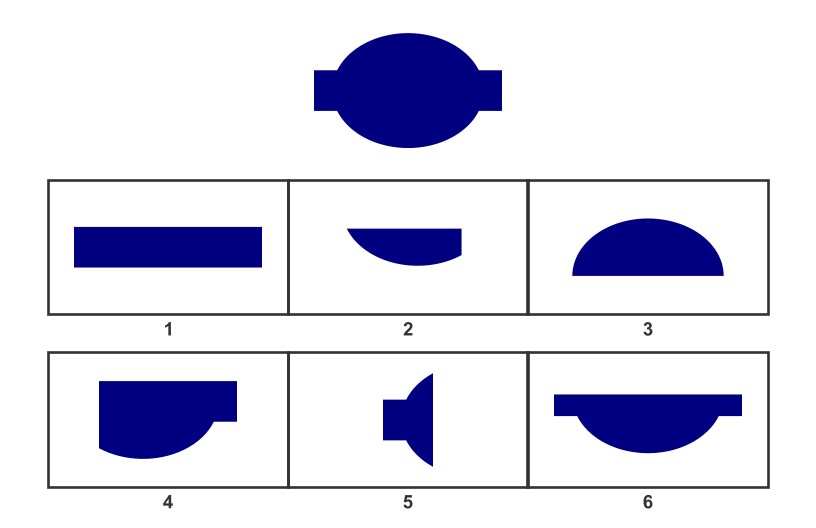
Answer: 2, 4, 5
3. Verbal Comprehension – Information
Questions in this subtest are designed to assess whether or not your child grasps the information that other kids his or her age generally know. This subtest covers the types of information included in typical history, math, science, geography, and art curricula – in other words, whatever age-appropriate material kids are learning at school!
Name 3 organs in the human body that help you digest food.
Answer: Esophagus, stomach, large intestine, small intestine, colon, rectum
See if TestingMom.com supports your child’s test by your school district. If you don't see your child's school district listed, check with us! We have practice for other tests as well.
Tell us about your experiences
2 Responses
Nice
esohagus
stomach
intestines